Related Posts
St Albans Parkrun Pain? When to See a Physio
Recurring pain can turn your Saturday 5K at Verulamium Park into a frustrating experience. Learn why running pain may keep coming back, when to adjust your training and how physiotherapy can help you return with greater confidence.
Gym Injuries in St Albans: When Should You See a Physio?
Not every ache after the gym means you need to stop training. Learn how to recognise when pain may need attention, when modifying your workouts could help and how physiotherapy can support your return to strength training.
Tennis, Padel and Racket Sports in Harpenden
Tennis and padel demand quick changes of direction, rotation and repeated overhead movements. Learn how to manage training load, recognise recurring problems and use physiotherapy to help keep small injuries from interfering with your time on court.
Ankle Sprain - Phoenix's Story
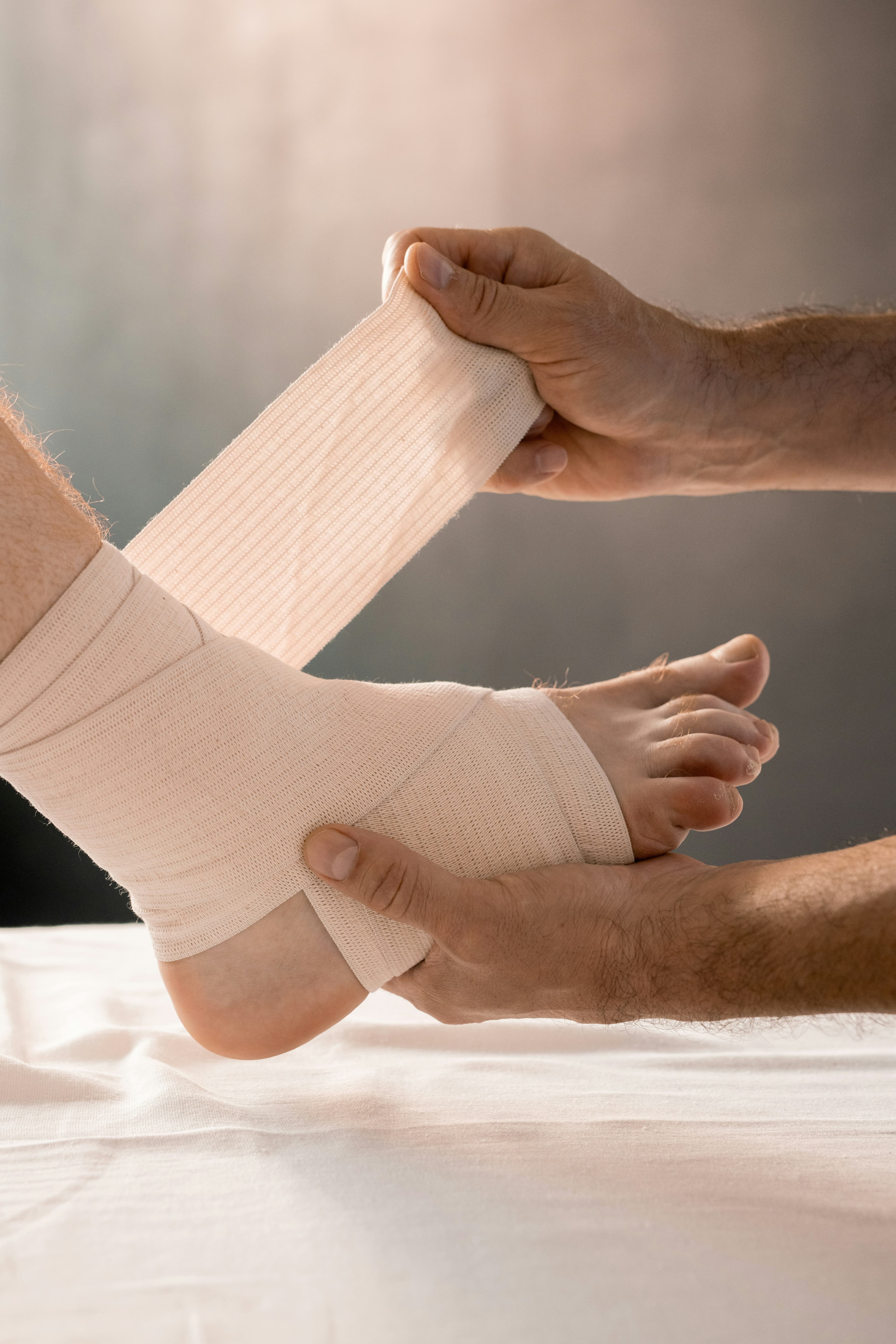
Lateral ankle sprains are among the most common injuries that individuals experience during athletic or recreational activities. A sprain refers to a ligament which has been overstretched. The anterior talofibular ligament (ATFL) is reported to be the weakest and the first ligament injured with an ankle sprain, followed by injury to the calcaneofibular ligament and then the posterior talofibular ligament.
This blog post will be talking about my recent, personal experience with an ankle injury.
It was a very wet training session at the hockey pitch on a cold Tuesday evening. Layered up and with my waterproof on, I was determined to still train at a high intensity. All was going well until 10 minutes into a drill I quickly changed direction and with the slippery surface, was unable to stop my right foot quick enough causing my ankle to roll.
Mechanism of injury: Ankle inversion – when the foot is turned inward to an abnormal degree relative to the ankle, causing the ligaments to overstretch. Ligaments possess the same properties as elastic bands, as they are able to stretch and snap back to their normal. When overstretched, they are unable to revert to their original shape due to small tears causing localised pain.
There are different grades of ankle injuries depending on the severity of the tear.
Grade I = The least severe with < 10% of the ligament fibres torn
Grade II = Between 10-80 % of fibres torn, classified as lower (< 35% torn) and upper (>35 % torn)
Grade III = > 80% fibres torn
At the moment of injury, I heard a ’pop’ and felt a sudden sharp pain in my lateral ankle. The pain slowly dissipated, and I was able to get to my feet after a few minutes but with difficulty. Taking my first few steps and putting weight on the injured side was daunting as the joint felt extremely weak and loose. I rested my ankle immediately and placed ice around the joint reducing a lot of the swelling.
The following day my ankle was extremely stiff, tender to touch and painful to put weight through my foot. The swelling was still present with difficulty pinpointing the lateral malleolus of the fibula and slight effusion to the medial ankle. My Achilles tendon was extremely tight and restricted my ankle’s dorsiflexion with pain during plantarflexion, making walking slightly difficult. Ankle strapping was applied for most of the day, helping to reduce the swelling.
The range of movement of the ankle becomes greater as each day passes, ensuring lots of rest and compression with tape.