Related Posts
Tight Hamstrings? Stretching Isn't Always the Answer.
Stretching more isn’t always the answer. Here’s why hamstring tightness is often about strength, load, or nerve sensitivity and not flexibility.
The Three Most Common Gym Injuries We’re Seeing Right Now (And How to Avoid Them).
A little New Year motivation is a great thing…but if your body’s starting to grumble, you’re not alone. Here are the biggest training niggles we’re treating in Carter & George clinics right now, plus the simple steps that can keep you lifting, running and progressing pain-free.
Why Your Back Pain Keeps Coming Back After 50 (and What Actually Helps)
If you’re over 50 and find yourself saying, “My back pain just keeps coming back”, you’re not alone.
Why are Premier League Injuries at a New High?
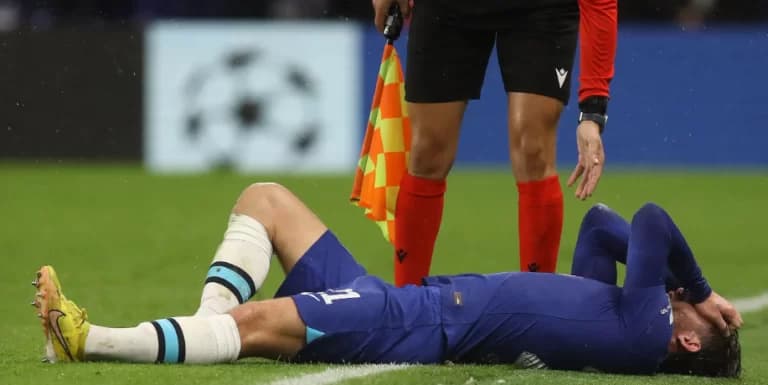
The Premier League has recently seen an unprecedented rise in player injuries, which has sparked concerns among teams, fans, and pundits alike. This surge is not isolated to one or two clubs; it’s a league-wide issue that’s affecting the quality of the game and the performance of teams.
The Premier League and Its Popularity
The Premier League holds a unique position in the global sports landscape. Launched in 1992, the EPL has swiftly grown into the most-watched football league in the world, with a cumulative global audience of billions.
Its popularity stems from a combination of factors, including high levels of competitiveness, the presence of iconic clubs with rich histories like Manchester United and Liverpool, and sheer star power, with some of the world’s best players plying their trade in the league.
Common Football Injuries
Football, being a high-intensity contact sport, is prone to a range of injuries. Among the most common injuries are muscular strains and sprains, particularly in the lower body.
Hamstring injuries are especially prevalent due to the explosive movements players often have to make.
Ligament injuries, such as anterior cruciate ligament (ACL) tears, are another common issue that can side line a player for an entire season. Additionally, concussions and other head injuries are an increasing concern, highlighting the need for improved player safety protocols.
Comparison of Injury Statistics
Recent data reveals a concerning trend in Premier League injuries. During the 2020/2021 season, over 400 injuries were reported, a significant increase compared to previous seasons.
Digging deeper, the severity of injuries also escalated. Players spent an average of 20 days side lined, compared to 15 days in the previous season and 14 days in the season before. These statistics highlight the gravity of the situation. As injuries rise in number and severity, the consequences for players, teams, and the league become more pronounced.
Noteworthy Players Side lined Due to Injuries
The injury crisis in the Premier League affects player availability and quality. Top stars like Virgil van Dijk and Kevin De Bruyne have endured prolonged absences due to injuries, impacting team performances. Arsenal’s Thomas Partey also had a disrupted first season in England. Losing key players affects teams and deprives fans of watching their favourite stars, impacting the league’s overall quality.
Congested Fixture Schedules
One of the main factors contributing to the surge in injuries is the congested fixture schedule that Premier League teams have to navigate.
The 2020/2021 season, in particular, saw a significant increase in the frequency of matches due to the delayed start of the season caused by the COVID-19 pandemic.
Teams had to juggle domestic league games, Cup competitions, and European commitments, often resulting in matches every three to four days.
This intensity allows minimal time for player recovery between games, subsequently increasing the likelihood of fatigue-related injuries.
Furthermore, this relentless schedule also limits the time available for tactical training and player conditioning, which could potentially prevent injuries.
Lack of Pre-Season Preparation
Another contributing factor to the injury crisis is the lack of proper pre-season preparation.
Traditionally, pre-season provides an essential period for players not only to regain fitness but also to adapt to new tactical systems or acclimate to new squads for transferred players.
However, due to the compressed schedule brought about by the pandemic, teams had significantly less time for pre-season preparation.
The reduced time for conditioning and acclimation likely led to an increased susceptibility to injuries as players were thrust into high-intensity competition without adequate preparation.
This lack of pre-season preparation, coupled with the congested fixture schedule, presents a significant challenge for player health and performance in the Premier League.
How Injuries Affect Teams and League Dynamics
Key player injuries significantly impact teams and the league. When star players are side lined, teams struggle to replace their influence, resulting in weaker performances. For example, Liverpool’s defensive struggles in the 2020/2021 season after Virgil van Dijk’s injury led to more goals conceded and dropped points, costing them the Premier League title.
Current Efforts by Clubs to Manage Injuries
Injuries also disrupt team chemistry and tactical plans. Frequent line-up changes due to injuries
hinder player cohesion, essential for implementing game plans.
From the league’s perspective, injuries, especially to top players, detract from the spectacle and competitiveness of the Premier League. Absence of key players can lower the quality of play, impact viewer ratings, and affect the league’s global popularity and financial health.
Injury crises call for improved strategies for player fitness, recovery, squad depth, and rotations, influencing transfer market dynamics and team strategies. The ripple effects of injuries extend beyond players and teams, impacting the competitive balance and appeal of the Premier League.
Clubs are increasingly aware of the need to manage player injuries effectively. Many have dedicated medical and sports science teams that monitor player fitness levels, nutrition, and recovery protocols.
Advanced technologies like GPS trackers, heart rate monitors, and sleep trackers are used to collect data on player workload and recovery, which can help detect early signs of potential injuries. Additionally, clubs are investing in the development of comprehensive rehabilitation programs and facilities to help injured players return to fitness safely and effectively.
The Role of Sports Science in Injury Prevention
Sports science is vital for preventing injuries in football. It involves studying the physical and mental demands of the sport and designing training programs to improve player strength, flexibility, and resilience.
Sports scientists work with medical staff to implement recovery strategies and nutrition plans for effective recuperation after games.
Physiotherapy complements injury prevention with exercises, balance training, and manual therapy. Physiotherapists create personalized training plans and educate players on warm-up, cool-down, posture, and nutrition for muscle recovery. They collaborate with sports science teams to analyze wearable data for timely intervention.