Related Posts
St Albans Parkrun Pain? When to See a Physio
Recurring pain can turn your Saturday 5K at Verulamium Park into a frustrating experience. Learn why running pain may keep coming back, when to adjust your training and how physiotherapy can help you return with greater confidence.
Tennis, Padel and Racket Sports in Harpenden
Tennis and padel demand quick changes of direction, rotation and repeated overhead movements. Learn how to manage training load, recognise recurring problems and use physiotherapy to help keep small injuries from interfering with your time on court.
Rothamsted Park parkrun Pain? A Harpenden Physio Explains
Recurring pain can turn your Saturday 5K from something you enjoy into a source of frustration. Learn why running pain may keep coming back, when to adjust your training and how physiotherapy can help you return to Rothamsted Park with confidence.
Gym Injuries in St Albans: When Should You See a Physio?
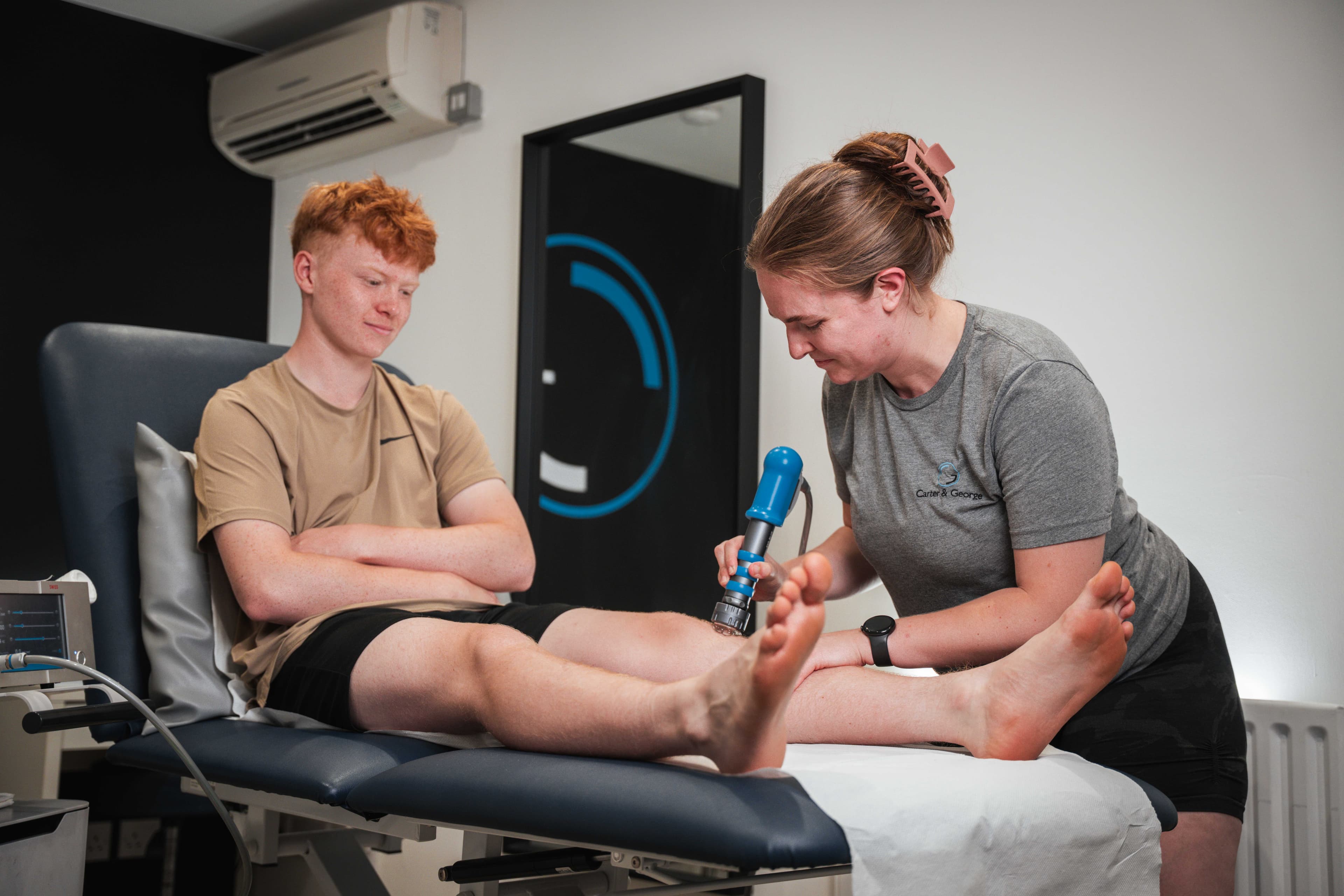
Gym Injuries in St Albans: When Should You Stop Training and Get It Checked?
Getting into a consistent gym routine is a positive thing, but when pain starts appearing during training, it can be difficult to know whether you should work through it, modify what you are doing or stop altogether.
A sore shoulder after pressing, knee pain during squats, lower-back discomfort after deadlifts or an elbow that only seems to hurt during upper-body sessions are all common reasons people start questioning whether something is wrong.
Not every ache after training means you are injured.
Muscle soreness after a new or demanding session is normal, particularly if you have recently increased your training. It will usually settle over the following days and often feels more like general stiffness or tenderness than sharp, localised pain.
What is more important is recognising when the pattern begins to change.
If pain appears during the same movement every session, becomes more noticeable as your workout progresses or starts affecting your everyday activities outside the gym, it may be worth looking into.
One of the biggest factors behind gym-related injuries is how quickly training changes.
You may have increased the weight you are lifting, added more sessions into the week, introduced a new exercise or returned after a period away. Your motivation may be back immediately, but your body can still need time to adapt to the increased demands.
That does not mean lifting heavier weights is dangerous.
Strength training is an excellent way to build physical capacity. Problems can occur when the jump in training is larger than the body is currently prepared for.
Another common reaction to pain is assuming your technique must be completely wrong.
Technique can matter, but there is rarely one universally perfect way that everybody needs to perform an exercise. People have different body shapes, movement patterns, experience and training goals.
The question is less about whether your movement looks exactly like somebody else's and more about whether your body is currently able to tolerate the way you are training.
If shoulder pain appears during pressing exercises, for example, the answer is not always to permanently avoid pressing. A physiotherapy assessment can help look at factors such as strength, movement, training volume, previous injuries and which specific positions trigger symptoms.
The same principle applies to lower-body training.
Knee discomfort during a squat does not automatically mean squatting is damaging your knees. Depending on the individual, temporarily adjusting depth, load or exercise choice while gradually building capacity may form part of rehabilitation.
Lower-back pain can create even more anxiety because many people immediately worry they have seriously damaged something.
While certain symptoms do need medical assessment, back discomfort during training does not automatically mean you need to stop exercising indefinitely. Understanding what triggered the problem and gradually rebuilding tolerance can often be an important part of returning.
A useful rule is to pay attention to how your symptoms behave rather than simply asking whether there is any discomfort at all.
If pain is becoming progressively worse, persists between sessions, limits your normal movement or causes you to repeatedly change your training, seeking an assessment can give you more clarity.
Physiotherapy for gym-related injuries should also take your actual goals into account.
If you want to return to lifting heavy weights, rehabilitation eventually needs to prepare your body for heavy weights. Being comfortable while resting is only one stage of the process.
At Carter & George St Albans, physiotherapy and rehabilitation are built around the individual, their symptoms and the activities they want to return to.
Whether your goal is getting back to strength training, returning to a class or simply exercising without constantly worrying about the same problem, the aim is to help you understand what is happening and create a clear progression forward.
If the same shoulder, knee, back or elbow pain keeps interfering with your gym sessions, an assessment can help you decide what needs to change and what you can continue doing safely.
Book a physiotherapy assessment with Carter & George St Albans and start working towards training with greater confidence.