Related Posts
Cricket Injuries in Harpenden: Why the Off-Season Matters
The end of cricket season is an opportunity to address the aches you have been managing all summer. Learn why symptoms can return after time off and how targeted rehabilitation can help you recover, build physical capacity and prepare for next season.
Why Integrated Care Matters at Carter & George
Pain and injury do not always require the same solution. Discover how an integrated approach can connect physiotherapy, sports medicine, diagnostics and rehabilitation to create a clearer care pathway built around your individual needs.
Returning to Exercise after Injury
Getting back to exercise after an injury is about more than being pain-free. Learn how a structured, progressive approach can help rebuild physical capacity, restore confidence and prepare your body for the activities you enjoy.
Getting Back Into Exercise Safely
Getting Back Into Exercise After Summer: How to Build Up Without Overdoing It
September often feels like a second January.
Summer holidays finish, routines return and suddenly everyone decides it is time to get back to the gym, start running again or return to regular sport.
That motivation is positive.
The mistake is trying to make up for several quieter weeks in the first few days.
If your normal routine has changed over summer, your body may not currently be prepared for exactly the same amount of exercise you were doing before.
That does not mean you have lost all of your fitness. It simply means that a gradual return is usually more sensible than jumping immediately into your previous workload.
For runners, that may mean beginning with shorter or easier runs rather than immediately returning to your previous weekly mileage.
For people returning to the gym, it could mean reducing the weight or volume for the first couple of sessions.
For tennis, padel or other sports, it may be worth allowing recovery between early sessions rather than suddenly playing several times in the same week.
The body adapts to the demands placed on it.
When those demands increase gradually, it has time to build capacity. When they increase sharply, aches and injuries can sometimes appear because the change has happened faster than the body can comfortably tolerate.
This is particularly relevant if you are also returning to a busy work routine.
Training stress does not exist in isolation. Sleep, recovery, work demands and the rest of your activity all form part of the wider picture.
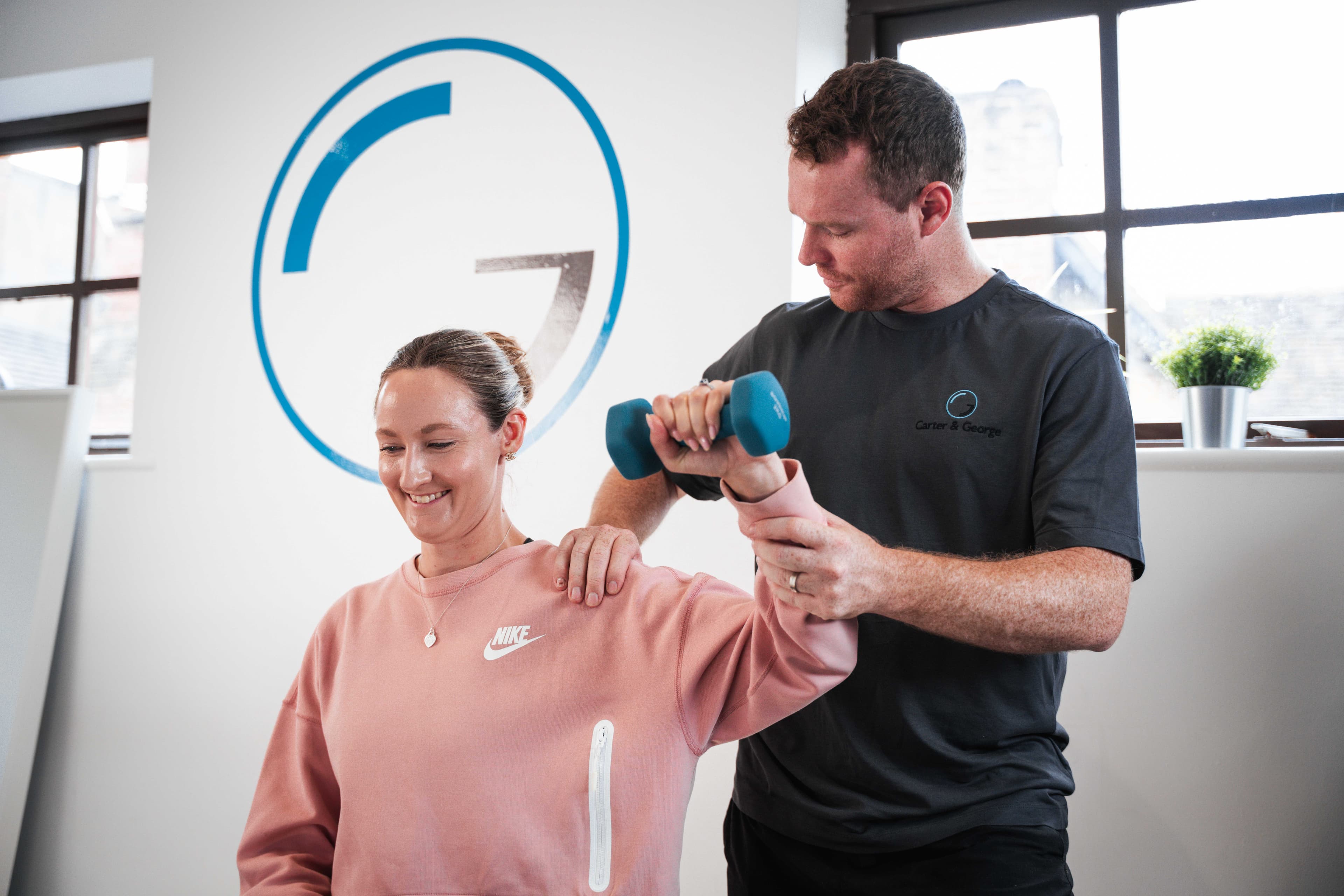
Strength training can be useful when returning to exercise because it helps build physical capacity rather than relying solely on your chosen sport to prepare you for that sport.
But the programme does not need to be complicated.
Consistency is usually more valuable than trying to do everything at once.
If you already have a recurring injury, this is also a good point to deal with it rather than hoping it behaves differently this time.
Pain that reappears every time you resume running, gym training or racket sports may benefit from assessment so that you can understand what may be contributing to the pattern.
At Carter & George Harpenden, physiotherapy and rehabilitation are designed around the individual and the activities they want to return to.
Whether your September goal is your first Rothamsted Park parkrun, getting back on the court or simply rebuilding a regular exercise routine, the aim should be sustainable progress rather than doing as much as possible in week one.