Related Posts
St Albans Parkrun Pain? When to See a Physio
Recurring pain can turn your Saturday 5K at Verulamium Park into a frustrating experience. Learn why running pain may keep coming back, when to adjust your training and how physiotherapy can help you return with greater confidence.
Gym Injuries in St Albans: When Should You See a Physio?
Not every ache after the gym means you need to stop training. Learn how to recognise when pain may need attention, when modifying your workouts could help and how physiotherapy can support your return to strength training.
Tennis, Padel and Racket Sports in Harpenden
Tennis and padel demand quick changes of direction, rotation and repeated overhead movements. Learn how to manage training load, recognise recurring problems and use physiotherapy to help keep small injuries from interfering with your time on court.
Shoulder Pain Doesn't Always Mean Something Is Damaged
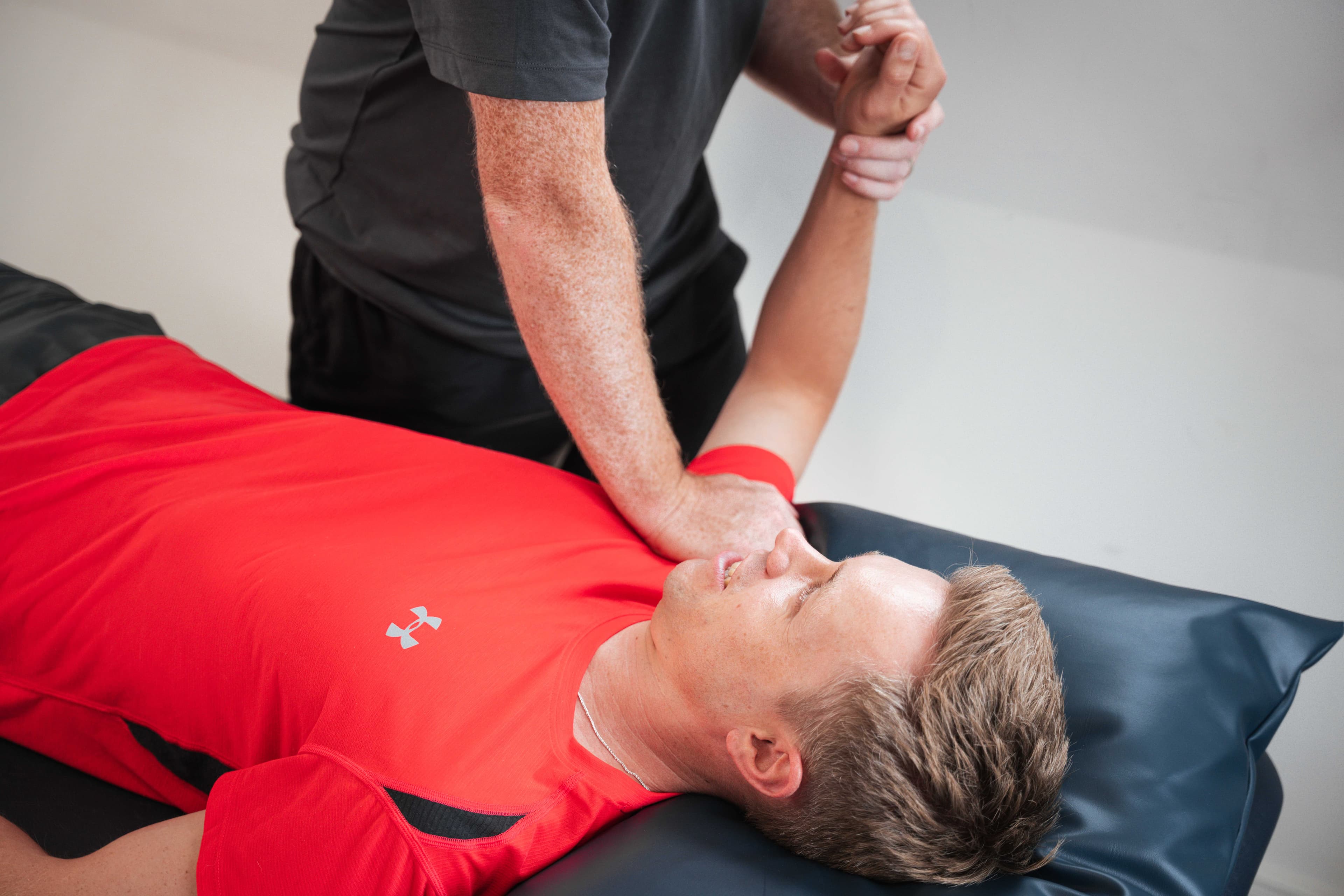
Shoulder pain is one of the most common reasons people seek physiotherapy. In fact, around 15-20% of adults will experience shoulder pain at some point, and for many people it can become a recurring problem. But despite how common it is, shoulder pain is often misunderstood.
One of the first things people ask us in clinic is:
Have I torn something?
The reality is that shoulder pain is rarely that simple.
Pain can be influenced by movement, strength, training load, recovery, stress, sleep and previous injuries. Understanding what's driving the problem is often more important than finding a label for it.
Shoulder Pain Doesn't Always Mean Damage
Many people assume pain automatically means something is torn, damaged or worn out. However, research shows that many adults have changes in their shoulder tendons without experiencing any pain at all. Rotator cuff tears, for example, are commonly found on scans in people who have no symptoms whatsoever.
This is why scans don't always tell the full story.
A scan might show structural changes, but it doesn't necessarily explain why someone is experiencing pain.
That's why Carter & George physiotherapists look at the bigger picture rather than relying on imaging alone.
What Commonly Causes Shoulder Pain?
One of the biggest contributors we see is something called a load and capacity mismatch. Put simply, the shoulder is being asked to do more than it's currently prepared for. This often happens after:
starting a new gym programme
increasing training volume
decorating or DIY projects
gardening
repetitive lifting
returning to sport after time away
The shoulder tissues become overloaded and symptoms begin to appear.
Interestingly, many people notice:
pain when lifting overhead
discomfort reaching behind them
pain carrying heavy objects
symptoms that worsen the day after activity
These are all common patterns we see in clinic.
Why Does Shoulder Pain Keep Coming Back?
This is often where people become frustrated.
They rest.
The pain settles.
They return to normal activity.
Then the pain comes back.
Usually this happens because the underlying capacity of the shoulder hasn't changed. The symptoms may have improved, but the shoulder hasn't become stronger or more resilient. That's why effective rehabilitation focuses on more than pain relief. The goal is to improve what the shoulder can tolerate.
The Factors People Often Overlook
One of the most interesting things we discuss in clinic is that shoulder pain isn't only influenced by the shoulder itself. Several factors can affect recovery, including sleep quality, stress levels, previous shoulder problems, general fitness, activity levels and confidence in movement.
Poor sleep and high stress can increase pain sensitivity and make recovery feel slower, even when the shoulder itself is improving. This doesn't mean the pain is psychological. It means the body is more complex than simply muscles and joints.
Do I Need a Scan?
Not always.
While scans can be useful in certain situations, early imaging isn't automatically the answer. Many findings on scans are completely normal age-related changes and may not be responsible for symptoms. A thorough assessment often provides more useful information than a scan alone.
That's why physiotherapy typically focuses on:
understanding your symptoms
assessing movement
identifying strength deficits
evaluating loading patterns
creating a rehabilitation plan
before considering whether further investigations are necessary.
How Physiotherapy Can Help
Shoulder pain is rarely a one-size-fits-all problem. At Carter & George, we assess movement quality, strength, mobility, training and activity levels, lifestyle factors and recovery habits.
Treatment may include rehabilitation exercises, mobility work, strength training, education, manual therapy and load management advice.
Most importantly, we help people understand why their shoulder is painful and what needs to change to improve it.
The Good News
Shoulder pain can be frustrating, particularly when it starts affecting sleep, work, exercise or sport. But pain doesn't automatically mean damage.
And in many cases, understanding the problem properly is the first step towards solving it.
With the right rehabilitation plan, most people can return to the activities they enjoy with less pain, more confidence and a stronger, more resilient shoulder.
Written by Pin Khor, Sports Therapist at Carter & George Radlett.