Related Posts
St Albans Parkrun Pain? When to See a Physio
Recurring pain can turn your Saturday 5K at Verulamium Park into a frustrating experience. Learn why running pain may keep coming back, when to adjust your training and how physiotherapy can help you return with greater confidence.
Gym Injuries in St Albans: When Should You See a Physio?
Not every ache after the gym means you need to stop training. Learn how to recognise when pain may need attention, when modifying your workouts could help and how physiotherapy can support your return to strength training.
Tennis, Padel and Racket Sports in Harpenden
Tennis and padel demand quick changes of direction, rotation and repeated overhead movements. Learn how to manage training load, recognise recurring problems and use physiotherapy to help keep small injuries from interfering with your time on court.
You’ve heard if it, but what is an ACL Injury?
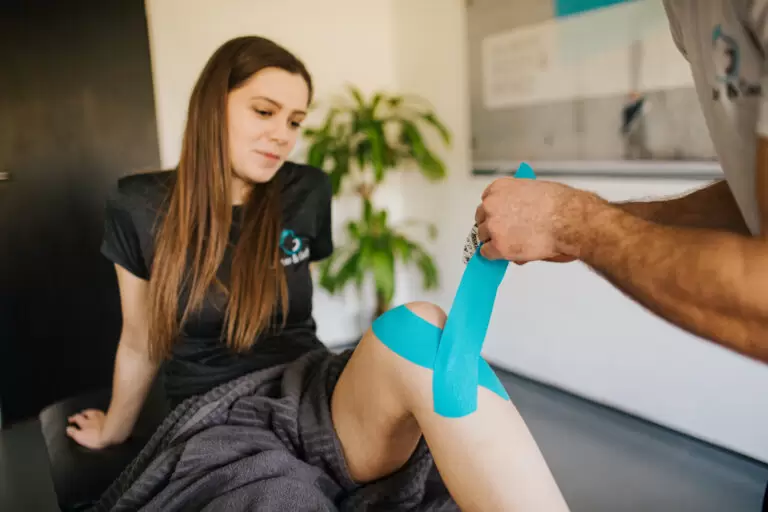
The anterior cruciate ligament (ACL) is located behind the knee cap and is one of the four key knee stabilisers. It connects the tibia (shin bone) to the femur (thigh bone). The main role of the ACL is to ensure the tibia twists relatively to the femur, stopping any abnormal movements such has knee valgus or hyperextension.
It is estimated that around 30 ACL ruptures occur in every 100,000 people, meaning around 20,000 ACL ruptures occur in one year in the UK alone. The highest incidences happen between the ages of 15 and 45. Many describe their injury as their knee giving way or a “popping” sensation or feeling of dislocating. A loss of range of motion, severe pain and swelling within a few hours are symptoms which can suggest an ACL injury.
The most common mechanism of injury is internal rotation of the femur and external rotation of the tibia accompanied by knee valgus. This movement is common in sports involving jumping, dodging or changing direction quickly. High risk sports such as skiing increase the chance of a ligament injury along with playing surfaces or footwear which possess high traction such as 3G/4G pitches and studs.
ACL ruptures can also happen due to hyperextension of the knee, overstretching the ligament. It as been found that 80% of ACL injuries are non-contact and 20% are contact related. It has also been found that ACL injuries are more common in females compared to males, believed to be due to the increased production of elastin in females. Increased flexibility gives a sporting advantage in sports requiring a high range of motion at joint (gymnastics, diving etc). However, this means ligaments are more lax allowing for microtrauma to occur, weakening the ligament making it more susceptible to a rupture.
Recovery from an ACL injury can differ depending on the age of the patient and what level they are at in sport:
Age: This affects whether surgery would be an option. Generally surgery is not recommended to patients below the age of 20 as it may disrupt normal growth patterns.
Sporting level: Elite athletes almost always choose surgery as the first step towards their rehabilitative journey. Surgery allows reconstruction of the ACL allowing for a quicker recovery which is ideal for professional athletes who earn money by playing sport. For someone who does not play sport as their profession, the importance of returning to sport does not outweigh the risk of reinjury which goes alongside it.
The average time estimated for full recovery from an ACL injury is between 9 months to a year, although studies have shown those who take longer than this have a reduced risk of re-injury. Ensuring the correct course of treatment for your needs is completed is vital for the most effective rehabilitation and decreasing the chances of reinjury.
If you have suffered an ACL injury please get in touch.