Related Posts
Desk Job and Commuter Aches in Harpenden: When Should You See a Physio?
Long commutes, desk work and hours in front of a screen can make neck, shoulder and back discomfort a regular part of the working week. Learn why movement and variety matter, what changes may help and when it could be time to see a physio.
Neck and Shoulder Pain From Desk Work: A Hampstead Physio’s Guide
Long hours at a desk can leave your neck and shoulders feeling stiff, tense or uncomfortable. Learn why movement and variety matter, when recurring symptoms are worth assessing and how physiotherapy can help.
Running on Hampstead Heath With an Injury? What to Do Before It Gets Worse
From hills and uneven terrain to sudden increases in mileage, running can place significant demands on the body. Learn how to respond to recurring aches, adapt your training and know when it’s time to get an injury assessed.
All you need to know about IMS needling
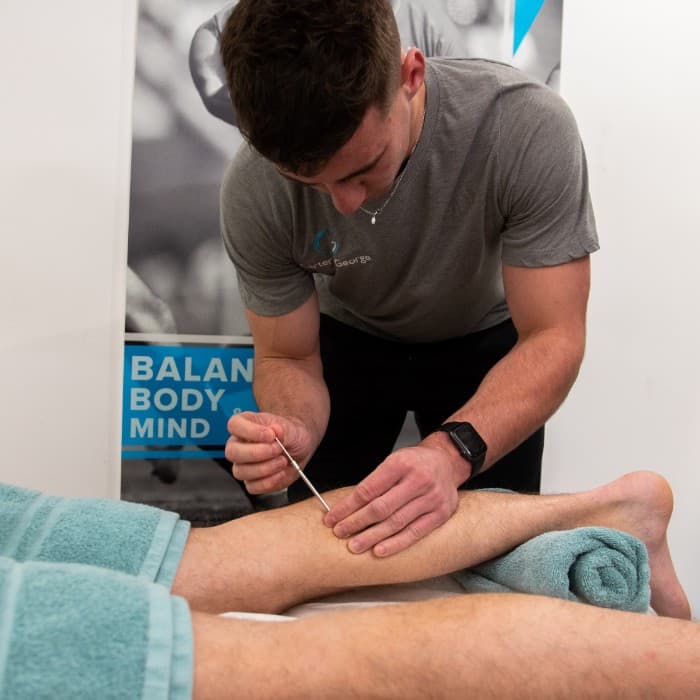
IMS (or intramuscular stimulation) is similar to traditional acupuncture, in that it involves the insertion of needles into the body to relieve pain.
The difference resides in the fact that IMS is a far more specific and purposeful method of pain relief than its older counterpart. Rather than focusing on pre-mapped points in the body that relate to different organs, muscles and nerves (as traditional acupuncture does), IMS practitioners will assess each individual patient’s skin, posture and movement in order to work out which areas of the body have underlying nerve irritation. These assessments will then determine where and how the physiotherapist treats the patient; the areas treated will vary massively from person to person, and the treatment is tailored to each individual’s specific needs.
IMS needles target specific deep muscles. They are not left in for ten minutes, but are instead pulled in and out as the physiotherapist feels the tightness of the muscle and stimulates it accordingly. Banded (tight/knotted) muscles will contract and cramp, but usually release after 5-10 seconds. The therapist then removes the needle and moves onto the next point.
Intentionally inciting contractions in this way causes the muscle to overstretch, which triggers the tendons attached to it. They sense that the muscle is overstretched, and signals sent from the spine then tell the muscle to relax. This produces immediate and lasting pain relief.
The process of IMS is extremely active, and requires expert knowledge on the part of the practitioner regarding anatomy and muscle banding. It is therefore a specialist form of treatment not offered by many clinics, despite delivering great results. We will offer it as part of our physiotherapy treatment programmes, as it is a total assessment and treatment option that often picks up areas of dysfunction not spotted on scans.
With IMS, physiotherapists can ensure that precisely the right areas are treated in order to restore optimal movement and pain relief for their patients; the method is especially effective for the treatment of headaches, slipped discs, facet joint pain and back and neck pain.
For more information or to enquire about appointments, please don’t hesitate to contact us.
Our clinics are open in Hertford, Hitchin and Radlett.